PedicleForce
Rightsizing Patient-Specific Posterior Fixation surgery planning
in Bad Bone Quality

PedicleForce was at LA2023 MedTech, LA2023 NASS, VPH2022 and ISTA2019 [1]


This is what you get from PedicleForce:

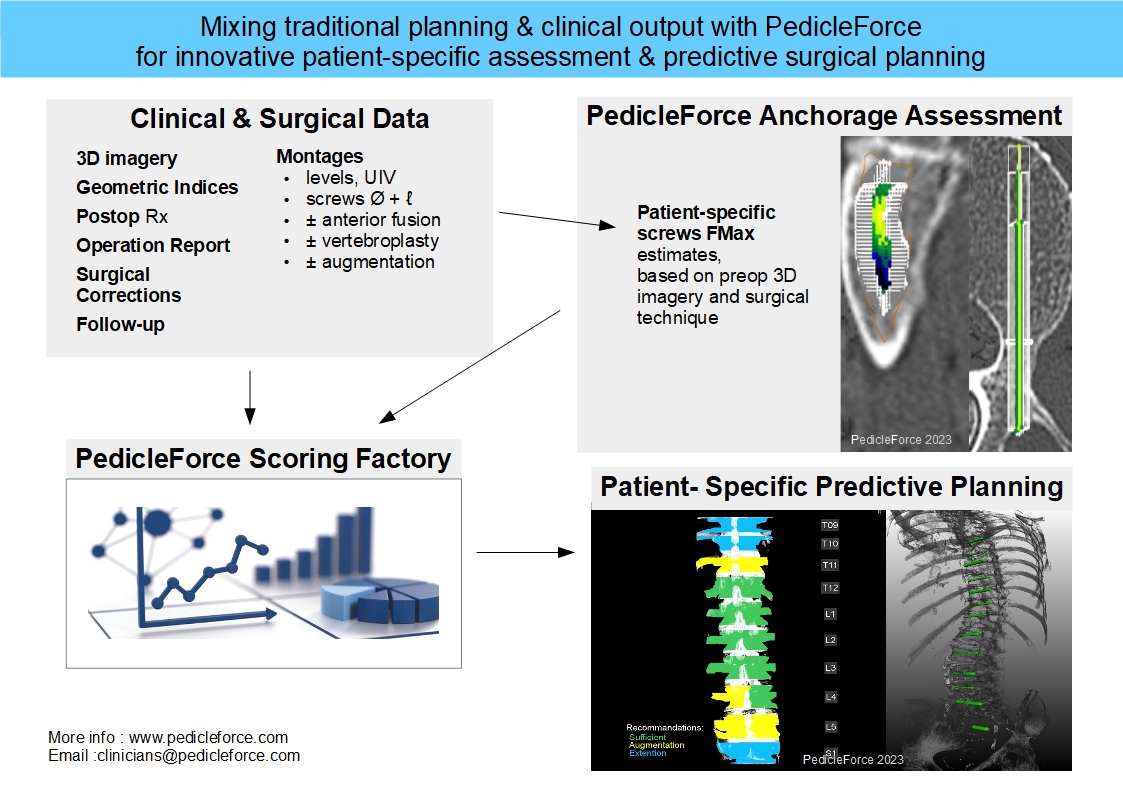
Visual Patient-Specific Surgery Planning Recommandations
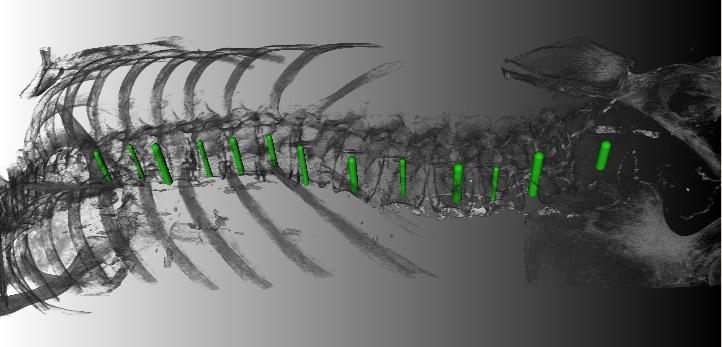
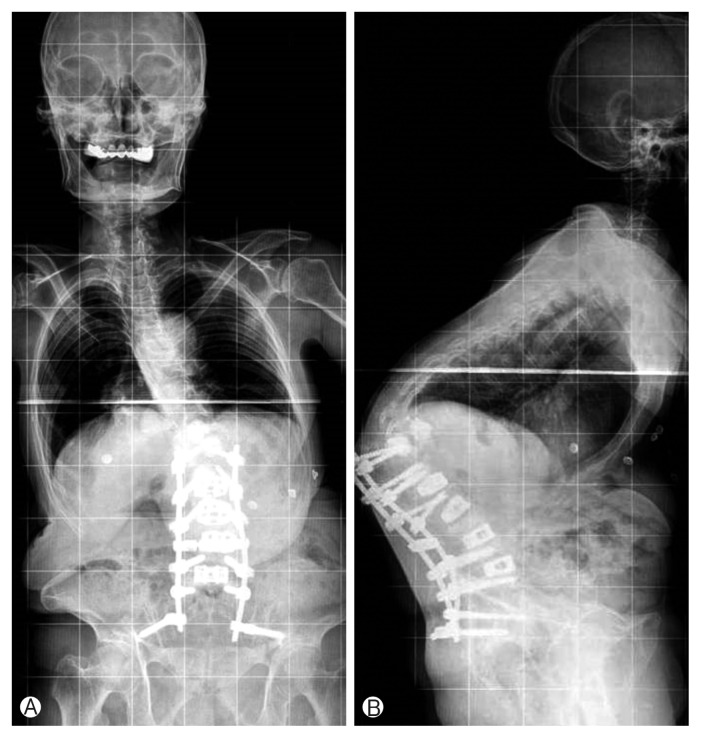
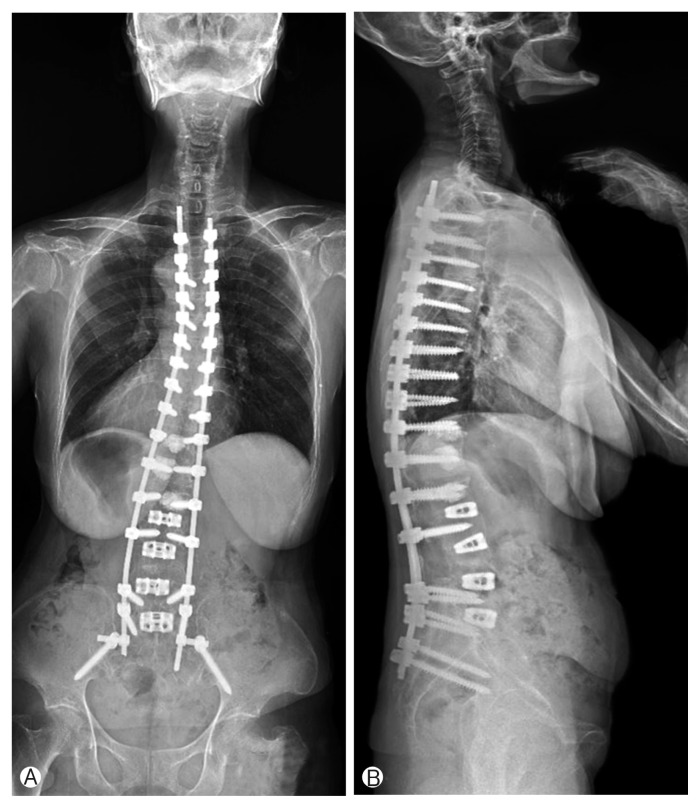
The initial L5-T12 in green posterior fixation turned into S1-T9 in green + yellow + blue for an osteoporotic patient.

In green is what we would give for 100% of the patients as a first procedure: 78% will have a satisfactity clinical outcome.
But 22% of the osteopenic/osteoporotic patients will suffer from BMD related complication with this limited montage.

In blue and yellow: vertebral extention required for the 22% to avoid BMD related complication. Yellow indicates selective pedicle augmentation.
PedicleForce is a game changer in bad bone quality

For over 50 years we implant pedicular screws in bad bone quality for posterior fusion with a constant high well documented mechanical failure rate of 22% (Z.Fan Plos One 2023, CJ. DeWald Spine 2006). This surgical doom has a $5b annual cost in the USA, and $1b for scoliosis alone.
This situation is due to the 78% of procedures which succeed with a standard limited number of instrumented vertebrae: a general principle of surgery is to be as less invasive and dilapidating as possible. That is why we give to every patient the limited vertebrae instrumentation spanning. The current state of patient-specific preop surgery planning cannot distinguish patients who need directly an extended montage (they will eventually get after a redo in 22% of the cases), from those who will be cured with a standard montage. The non linear BMD distribution within a given patient's vertebra and between the patient's vertebrae makes DEXA ou CT ROI noncontributing. PedicleForce.com responds to this human and economic burden.

PedicleForce is the only existing planning tool able to predict if the standard limited montage will suffice or if the patient needs directly an extended montage.


PedicleForce predicts for your patient any posterior pedicular anchorage with ρ=.99

PedicleForce is offering clinical study opportunities for ASD in bad bone quality

Email to register at: clinicians@pedicleforce.com


It's all about fixation
For over 50 years numerous innovations all intended to upgrade the pedicular screw fixation. However, how much can a particular screw resist in a specific anchorage remained a blur-zone, a territory reserved for academic approaches with heavy presets resulting in clinical unavailability.

In response to this longing need, PedicleForce provides clinicians with effortless, accurate and reliable strength predictions and surgery planning recommendations.

The PedicleForce fully automated FMax-G pedicular calculator is the answer.

FMax-G:
  • covers all insertable screw diameters and lengths
  • is Patient-Specific and Patient-Pedicle-Specific
  • is precise and accurate
  • comprises the final intra-operative screw trajectory precision uncertainty
  • explores all safe possible breachless trajectories
  • is a CT-based Web Service
  • "G" stands for guaranteed Fmax

  • PedicleForce clinical planning tools integrates the granular FMax-G information in loadsharing appraisal for:
  • multi-level instrumentation
  • derotation and kyphosis reduction forces predictions
  • pre-op general frailty assesment
  • short montage for spondylolisthesis, #, K
  • ...and redo.

  • FMax-G gives more sensitivity and specificity in benefit/risk assesment for:
  • montage loadsharing optimization and securization
  • rationale for extentions
  • best diameter and length for each pedicle
  • rationale for augmentation
  • PJK/PJF prevention

  • Getting started with PedicleForce surgical planning

    Step 1: Define the procedure


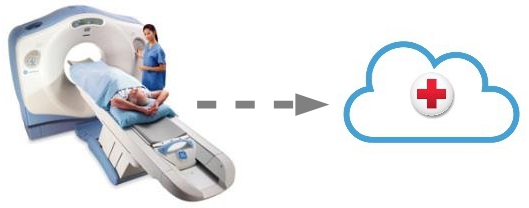
    Step 2: Upload the patient CT to our secured cloud


    Step 3: Receive a comprehensive 3D report including recommended screw for each anchorage sizes & Fmax-G in N, lb or Kg for each pedicle for all each targeted level and loadsharing proposal


    Step 4: Plan extension, selective or full augmentation bearing the expected operation peak forces.


    FAQ: How FMax-G deals with the key issue of screw insertion precision ?

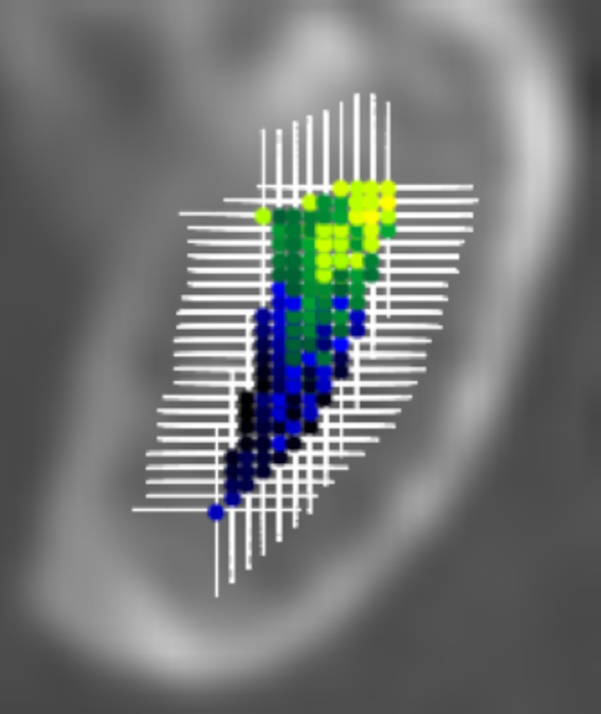
    Precision for screw insertion is a key issue whether the technique is free-hand or navigated. There are many possible insertion trajectories. As a result, each theoretical trajectory does not have the same strength since the bone density varies within the pedicle and anterior body.

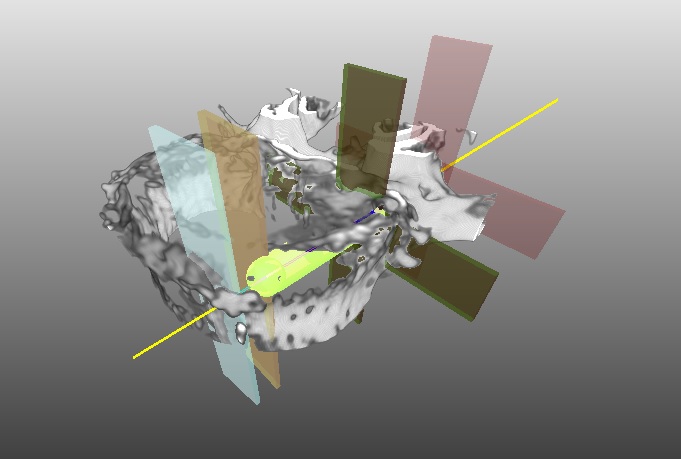
    PedicleForce simulates all relevant breachless trajectories with the full range of your vendor screw set in diameter and length and predict each resulting anchorage.

    Then PedicleForce selects the unmissable result for breachless trajectories: the baseline guaranteed construct prediction for each possible screw size of the whole screw range given the actual screw will be inserted breachless.

    The new paradigm: FMax-G = the baseline FMax you can rely on for planning independly from the insertion technology precision.


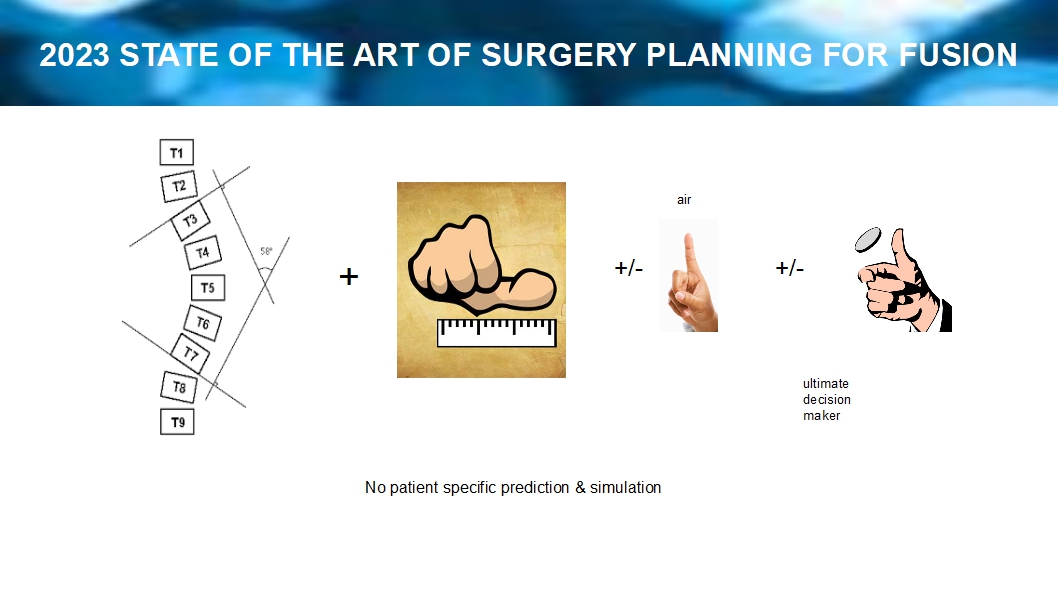
    FAQ: What is the State of the Art of Fusion Planning ?


    FAQ: How does PedicleForce downsize the blur-zone for a safer surgery?

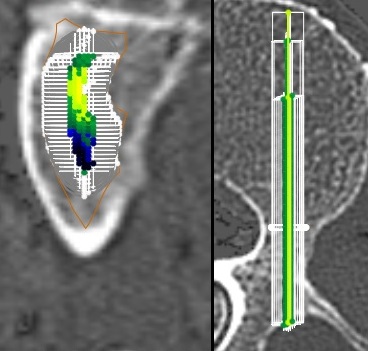
    PedicleForce deals with the interpersonal and even individual inter-vertebral bone density distribution variation with a vertebra patient-specific assessment

    These bone density distribution variations are potentialized by the actual peroperative screw trajectory unpredictibility.

    As a result, material failure like screw loosening, screw pullout, PKJ/PKF, debricolage and pseudoarthrosis, are hard to prevent.

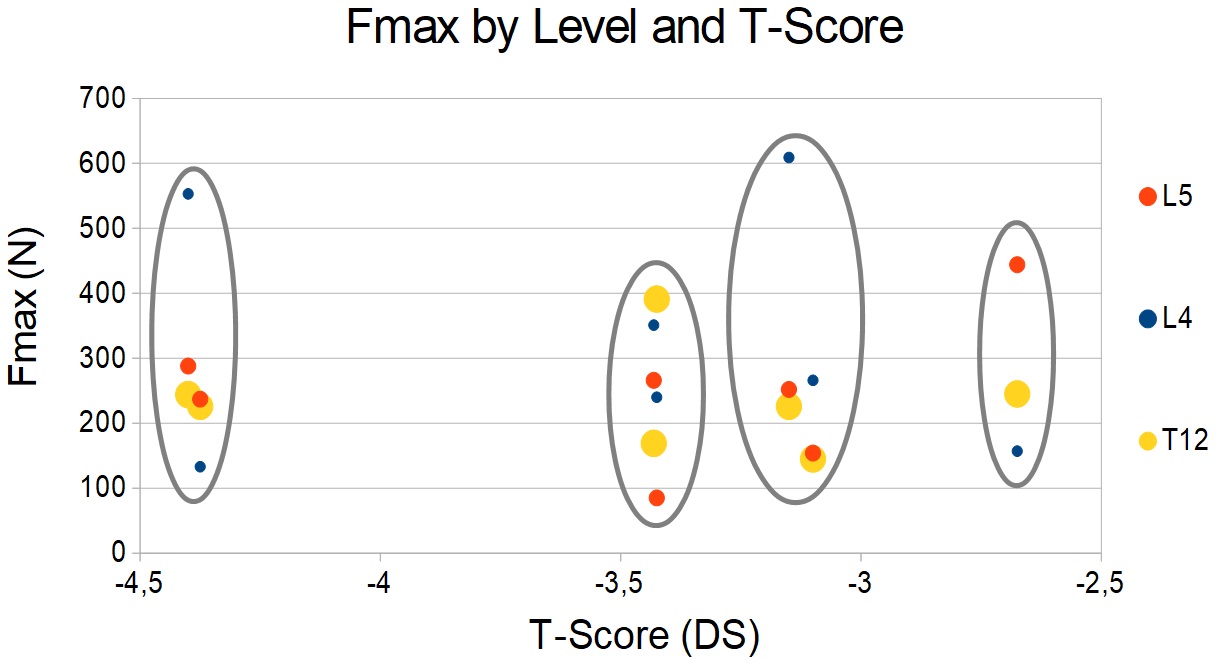
    Classical global indicators like DEXA T-Score, FRAX® ou TBS®, patient's status and operator's experience are important, but still poor clinical outcome predictors.

    In this cadaveric study, DEXA shows narrow T-Score clusters with large F-Max ranges. This illustrates the lack of accuracy for T-Score vs experimental pullout.


    FAQ: What are the biomechanical grounds of FMax-G?

    FMax-G is derived from FMax.
    FMax-G: baseline anchorage prediction with ρ=.99

    FMax is a widely admitted indicator for pedicular screw fixation systems apraisal.
    FMax is the maximum experimental axial load (N) applied on an inserted screw;
    any additional load is causing the progressive bone/screw interface destruction.


    Symetrically, FMax-G reflects the safe pedicular insertion strength capability for a given screw size and design.

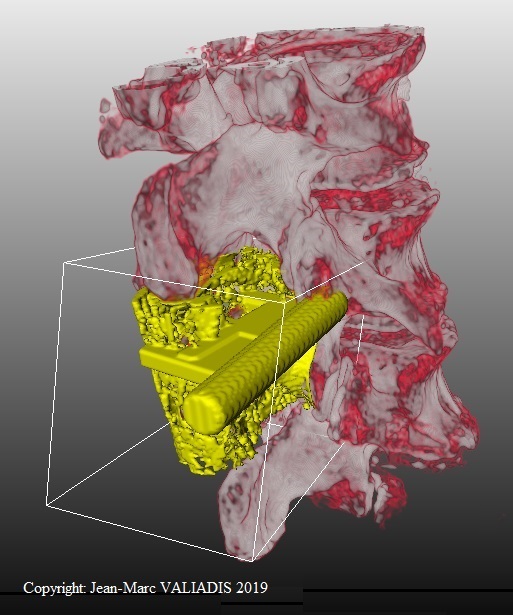
    PedicleForce has been developped after academic fundamental explorations with non clinical methods for accuracy golden standard definition (FEM +88µm µCT) [1] and meticulous innovative methodology in pullout testing for standard, fenestrated and expendable pedicular screws.
    PedicleForce has be confirmed by the in vitro golden standard testing: a 45 cadaveric vertebrae screw pullout with an accuracy of ρ = .99


    FAQ: What FMax-G means clinically during the procedure?
    If you apply more force than the FMax-G limit, then the plastic deformation starts:
  • 2mm of screw pullout means 50% of definitive anchorage loss.
  • 5mm of screw pullout is a 100% loss of anchorage.

  • FAQ: ρ=.99, seriously?
    Supporting clinical imagery, this tool reaches a high accuracy of 0.99 competing with µCT burdensome manual registered FEM.

    To achieve .99, PedicleForce differentiates between:
  • bone quality +++
  • vertebra geometry
  • vertebra structure
  • vertebra side
  • trabecular bone micronetwork patterns
  • irregular cortical thickness
  • osteophytis and fibrosis
  • structural preconditions ( #, vertebra plana, pedicle scares..)
  • PedicleForce uses IA techniques such as:
  • form recognition
  • machine learning algorithms
  • application framework for medical image processing and scientific visualization
  • advanced algorithms for image registration, segmentation
  • quantitative morphological and functional image analysis

    ...and cadaverical experimental validation.

  • FAQ: FMax-G for augmentation, the new cutoff

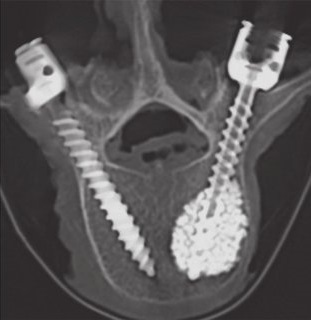
    Cook, 2004: Augmentation gives up to 250% more strength [2], with a leakage risk for each screw. If underused, a sole bad anchorage may cause material failure. Global indicators like T-Score are poor predictors.

    The new paradigm: Assessing the augmentation benefit/risk balance with Fmax-G, the Pedicle-Specific Predictor.


    FAQ: FMax-G for PJK/PKF prevention or postponement

    Yongjung, 2008: PJK occurs in as many as 39% of postoperative adult deformity patients, with a majority occurring within the first 6 to 8 weeks of surgery. [2]

    Screw anchorage is a key issue for PKF/PKJ prevention or postponement:

    Goldstein, 2015: "Osteoporosis can have a significant impact on the strength of spinal fixation as well as complication rates related to hardware failure and PJK/PJF. Evidence exists to support the use of increased points of fixation through the use of multilevel pedicle screws as well as consideration of cement augmentation, using either a fenestrated or solid screw technique. Further, in patients with compromised BMD, cement augmentation of adjacent uninstrumented levels may be of benefit [3] []4 [5] [6] [7].

    PedicleForce helps you to prevent this: by indicating this: ...and not necessarily all of this.

    FAQ: PedicleForce and other vendors

    PedicleForce interfaces with insertion masks, nav and robotics using 3D Imagery worls coordinates and mesh.

    PedicleForce model supports any vendor posterior fixation system.


    PedicleForce
    47-83 Bd de l'Hôpital
    75013 Paris, France

    Contact and registration: clinicians@pedicleforce.com